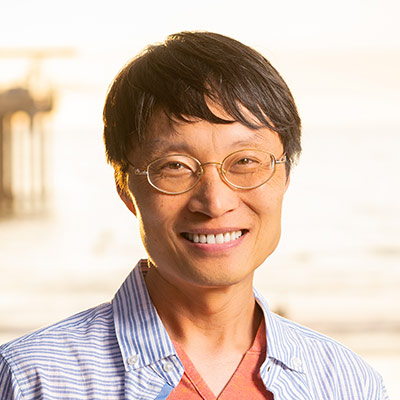
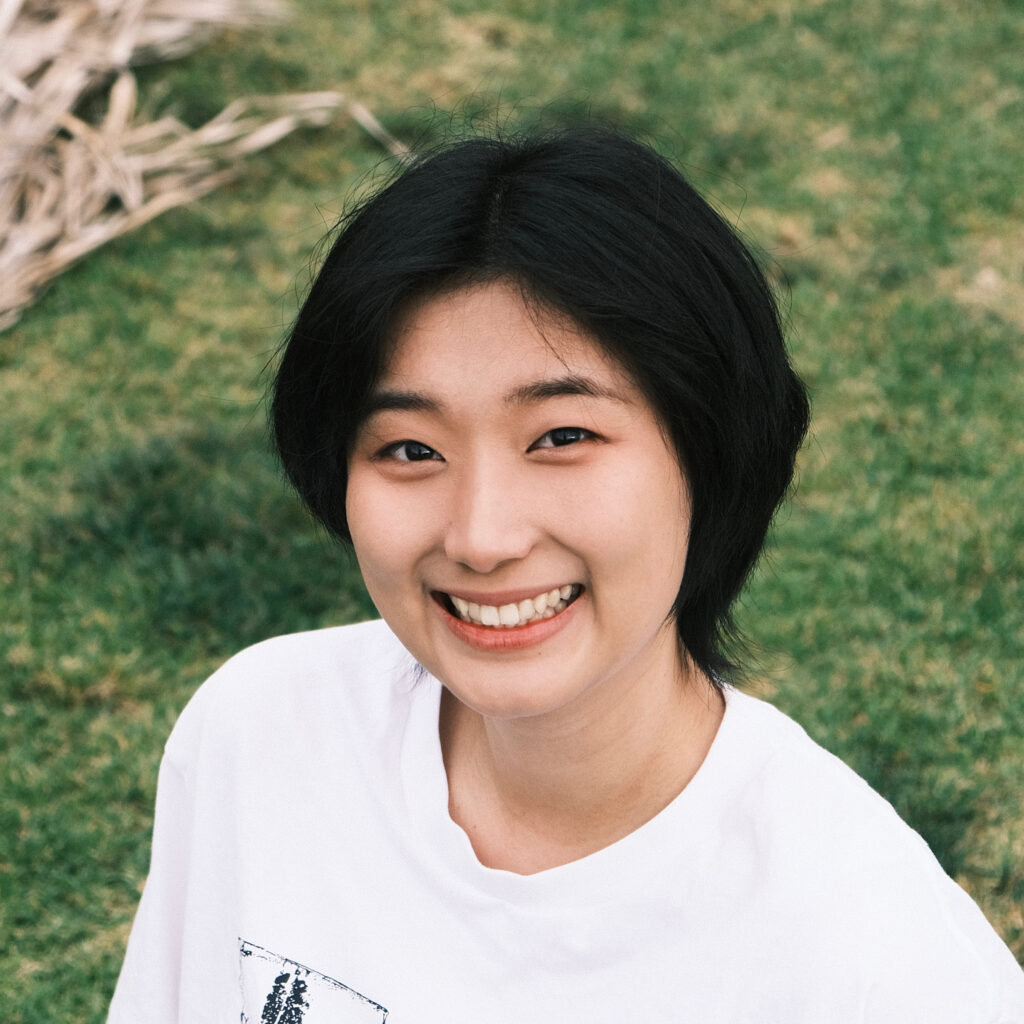
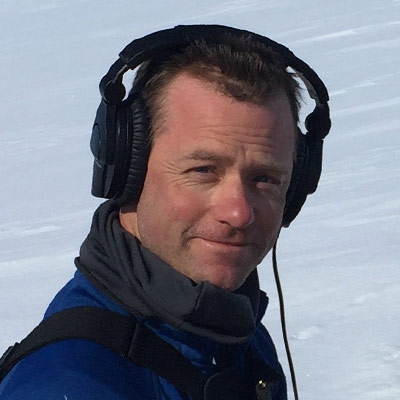
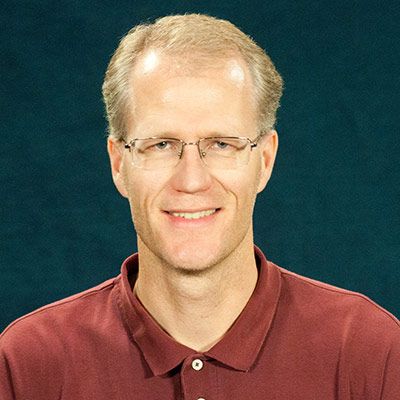
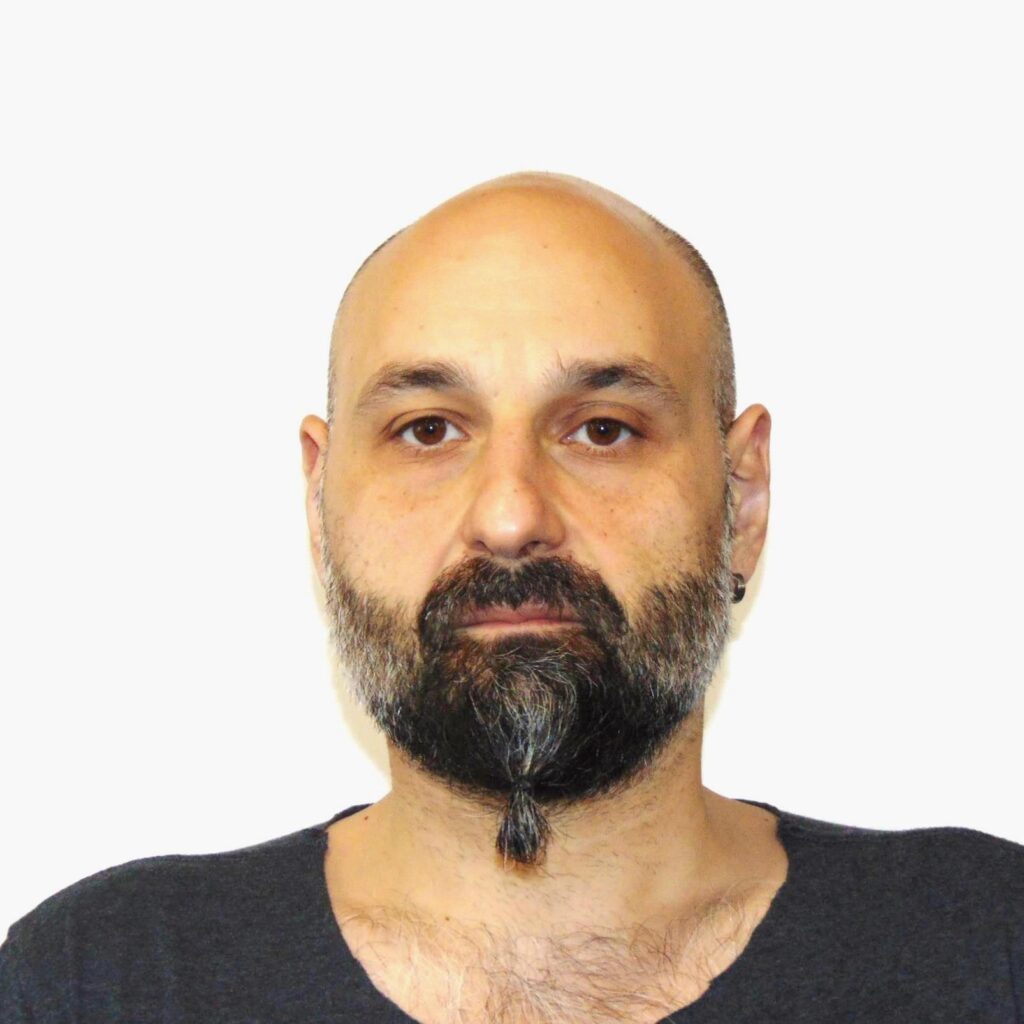
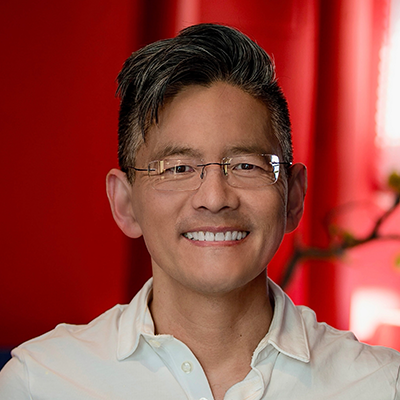
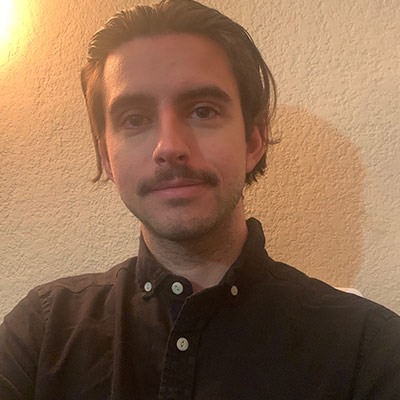
Lei Liang served as Composer-in-Residence at the Qualcomm Institute (2013-2016) where his multimedia works preserve and reimagine cultural heritage through combining scientific research and advanced technology. He returned to the Institute as its first Research Artist-in-Residence in 2018. Lei Liang’s recent works address issues of sex trafficking across the US-Mexican border (Cuatro Corridos), America’s complex relationship with gun and violence (Inheritance), and environmental awareness through sonic explorations of the Arctic (Six Seasons).
Lei Liang is the winner of the Rome Prize, the recipient of a Guggenheim Fellowship, a Koussevitzky Foundation Commission, a Creative Capital Award, and the Goddard Lieberson Fellowship from the American Academy of Arts and Letters. His concerto Xiaoxiang for saxophone and orchestra was named a finalist for the Pulitzer Prize in Music in 2015. His orchestral work, A Thousand Mountains, A Million Streams, won the prestigious Grawemeyer Award for Music Composition in 2021.
Liang is Chancellor’s Distinguished Professor of Music at UC San Diego. He authored and edited ten books and over sixty articles. There are 17 monographic CD albums dedicated to his music. His catalogue of more than a hundred works is published exclusively by Schott Music Corporation (New York). www.lei-liang.com
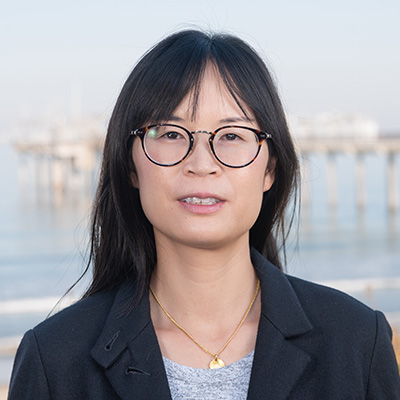
Emily Chin
Emily Chin is a geologist who studies the Earth’s crust and how it has evolved over time. She is currently an Associate Professor at the Scripps Institution of Oceanography, where she teaches courses in petrology and geologic history. Her research focuses on understanding the synergies between textures in rocks and how this relates to their chemical composition, and ultimately, how this all connects to the larger tectonic and geological story. In addition to geology, Emily has a passion for visual arts and enjoy illustrating nature and science.
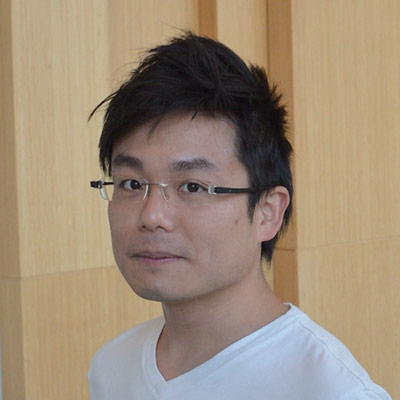
Yeung-ping Chen
Yeung-ping Chen serves as Associate Professor in Composition and Director of Academic Colloquia at South China Normal University School of Music. He has studied with Lei Liang, Clarence Mak, Law Wing-fai, and Christopher Coleman. In 2013 and 2014, Chen worked on the “China Sound Archive Project” directed by Lei Liang. As part of this project, over 250 hours of recordings of regional Chinese music were restored, digitized, and categorized. Chen now serves as Associate Professor in Composition and Director of Academic Colloquia at South China Normal University School of Music.
Charles Deluga
Charles Deluga is a researcher, composer, installation artist, and systems designer exploring the translation of signals across sensory domains. His creative practice combines ecoacoustics, spatial audio, synthesis, and signal processing to produce immersive contexts for experiencing the intersection of nature and math. Charles has designed and produced A/V systems for architectural media installations across North America, including the Statue of Liberty Museum and MoMA PS1. He is currently pursuing a PhD in Computer Music at UC San Diego after earning a master’s in Music Technology from NYU.
Peter Fee
Peter Fee took a sabbatical from his role as a high school environmental science teacher to earn a Master of Advanced Studies (MAS) at the Scripps Institution of Oceanography, UC San Diego. In addition to his studies, Peter taught a music and performance course. He combined his expertise in music and science by collaborating with scientist Joshua Jones to create an audio timeline where 1 second = 1 day titled “Arctic Soundscape: July 27, 2015 – August 4, 2016,” featured at the Anchorage Museum.
Keita Funakawa
Keita Funakawa ‘s passion lies at the intersection of technology, media, and science. He graduated from UC San Diego with a B.S. in Management Science (Quantitative Economics) and a minor in Visual Arts Digital Media. He co-founded Nanome in 2015 and now leads company operations. Nanome enables expert scientists, students, and hobbyists to design and simulate molecules in Virtual Reality. Nanome is the next step in computational/medicinal chemistry, structural biology, and beyond. Find out more about Nanome at nanome.ai
Timothy Gmeiner
Timothy Gmeiner is a San Diego, California-based interdisciplinary artist-educator and music producer. He has worked as the Assistant Producer/Director at the Qualcomm Institute’s Audio Spatialization Lab and is currently enrolled in UC San Diego’s Computer Music PhD program where he focuses on spatialized and interactive compositions in virtual reality, non-linear audiovisual live performance, and large-scale real-time reactive installations. His prior artistic work has garnered public acclaim from artists and publications such as Portishead, King Britt, Rolling Stone, and Pitchfork. He is currently a professor of music production and entrepreneurship at San Diego City College.
Yuemeng (Lindsey) Gu
Yuemeng (Lindsey) Gu is an Interdisciplinary Computing Artist and UI/UX designer focusing on everyday experiences as evidence and inspirations for her work. She is an undergraduate student at UC San Diego, double-majoring in Interdisciplinary Computing and the Arts and Cognitive Science (Design & Interaction). With an eye for detail, she explores the relationship between humans and the surrounding world, capturing moments of harmony and juxtapositions of technologies and arts. Born in China and later moved to California, her work as an international artist focuses on the intersection and merging between cultures.
Joshua Jones
Joshua Jones has spent decades studying marine mammals and the ocean through underwater sound. At UC San Diego, Josh has developed international collaborative research to study effects of climate change and increasing human activities on Arctic marine mammals. He produced the interactive exhibit, Whales: Voices in the Sea, which has been installed in nine US public aquariums and co-developed the SeaTech program, partnering with Alaskan and Alaska Native youth to conduct community-based research on marine mammals. Josh has worked in all the world’s oceans and has been a wilderness fishing guide in Alaska since 1995. Josh is the scientific advisor to Liang’s Arctic project.
Falko Kuester
Falko Kuester received an MS degree in Mechanical Engineering and MS degree in Computer Science and Engineering from the University of Michigan, Ann Arbor. He received a Ph.D. from UC Davis and currently is the Calit2 Professor for Visualization and Virtual Reality at UC San Diego. Prof. Kuester holds appointments as Professor in the Departments of Structural Engineering and Computer Science and Engineering at the Jacobs School of Engineering (JSoE) and serves as the director of the DroneLab, the Calit2 Center of Graphics, Visualization and Virtual Reality (GRAVITY) and the Cultural Heritage Engineering Initiative (CHEI) at the Center of Interdisciplinary Science for Art, Architecture and Archaeology (CISA3). Collaborations with Lei Liang include Hearing Landscapes, Hearing Seascapes, Hearing Extremes projects.
Tornike Karchkhadze
Tornike Karchkhadze is an audio and music machine learning researcher and composer from Tbilisi, Georgia. He specializes in deep neural sound synthesis, generative models, and computational creativity. He is currently a researcher in the REACH project, a collaboration between UC San Diego and IRCAM (Paris), focusing on multi-track music generation and musical source separation. He has industry research experience at Bose and Apple, with publications in collaboration with both. As a composer and artist, he has worked across pop, rock, and experimental music, with projects presented internationally in concert halls, clubs, and exhibition spaces. He will join Apple as an Audio Generative Research Scientist in June 2026.
James C. Neih
Professor James C. Nieh was born in Taiwan and grew up in Southern California. In 2000, he joined the University of California San Diego, where he is now a professor of biology and an Associate Dean in the School of Biological Sciences. He has served as department chair, held the Heiligenberg Chair of Neuroethology, was elected a Fellow of the Royal Entomological Society, and has received the Hambleton Award for his bee research as well as the Springer Nature Distinguished Editor Award.
His research focuses on how bees communicate, with particular emphasis on sound communication and other signals used by social bees to share information, warn nestmates of danger, and coordinate collective behavior. His lab studies honey bees, bumble bees, and stingless bees, examining how communication, learning, and cognition shape colony life. He also investigates bee health, including how pesticides, disease, diet, immunity, and the gut microbiome affect behavior and survival. By combining basic science with practical questions, his work aims to better understand how bee societies function and to find new ways to protect bees in a rapidly changing world. He also helps lead community efforts that support pollinator awareness and conservation.
Theocharis Papatrechas
Theocharis Papatrechas is a Postdoctoral Scholar at the Qualcomm Institute. His research transgresses into environmental and data sciences, audio engineering, acoustics, and spatial audio. Deploying acoustic sensors and focusing on sonification of extreme events, he investigates the impacts of such events on the acoustic signature of underwater and remote terrestrial environments. Papatrechas has a Ph.D. in Music Composition from UC San Diego and has held appointments at the Scripps Institution of Oceanography and CNMAT at UC Berkeley. His main contributions to Six Seasons include using audio software and design techniques to sculpt acoustic data. www.theocharis-papatrechas.com
Zachary Seldess
Zachary Seldess is an inventor, creative coder, and musician whose creative and professional work covers a wide variety of audio-related topics, including new applications in microphone and speaker array beamforming, the design of tools and techniques for large-scale graphics-driven spatial sound, algorithms for efficient and generalizable psychoacoustic modeling, and many other projects loosely centered around enhanced audible expression. Zachary is the author of the MIAP software toolset (https://zacharyseldess.com/miap), which was used for multi-channel sound spatialization in several collaborations with Lei Liang, including Hearing Landscapes and Six Seasons.
Keren Shao
Keren Shao is an audio and machine learning researcher at UC San Diego, specializing in singing voice conversion, melody extraction, and deep neural sound synthesis. A UC San Diego Mathematics graduate, he currently develops robust zero-shot voice conversion and AI-driven improvisation models for the REACH project. Beyond audio, he co-developed Pensieve, an AI-assisted grading platform for STEM coursework. As an interdisciplinary artist, his co-directed AI ensemble performance of Cornelius Cardew’s Treatise won runner-up at the 2024 IEEE Big Data AI Music Generation workshop.
Nicholas Solem
Nicholas Solem is a Ph.D. candidate in Computer Music at UC San Diego. His research focuses on training artificial neural networks to map psychoacoustical measurements to sound waveforms, which are then further harnessed in more elementary forms of synthesis, such as wavetable and granular. He holds a M.M. in Music Technology from New York University and a B.A. in Philosophy from the College of Wooster. In Six Seasons, Nicholas aided the team in sound design and post-production of Arctic sound materials to achieve pristine sonic results.
Samantha Stout
Samantha Stout studied Materials Science and Engineering at Cornell University, subsequently earning a Ph.D. in the same discipline at the UC San Diego. At UCSD, Stout joined the Center of Interdisciplinary Science in Art, Architecture, and Archaeology (CISA3) to work with the center’s founder Prof. Maurizio Seracini. She carried out field research in Florence, Italy and collaborated with Lei Liang on the Hearing Landscapes project for non-invasive materials analysis using multispectral imaging and X-ray Fluorescence Spectroscopy of watercolor paintings. In 2023, she joined Atomica as a Materials Scientist and Metrology Engineer in Santa Barbara, CA
Greg Surges
Greg Surges is a firmware & software engineer, computer music researcher, and composer. Currently Senior Firmware & DSP Engineer at Artiphon, he is a developer of innovative electronic musical instruments. Greg received his Ph.D. in Computer Music from UC San Diego, where he was a software developer and composer working with Lei Liang at Qualcomm Institute. Among the important software he developed for Hearing Landscapes include concatenation synthesis, and filtering through specific harmonic grids.
Gabriel Zalles Ballivian
Gabriel Zalles Ballivian is an audio engineer working towards a Ph.D. in Computer Music at UC San Diego. He specializes in the field of immersive audio, specifically ambisonics. His research has been published in AES (Audio Engineering Society) and his music has been performed at the Sound and Music Computing Conference (SMC) and New York City Electroacoustic Music Festival (NYCEMF), among others. In Six Seasons, Gabriel designed a MAX/MSP patch which encodes each surround sound audio file into ambisonics, allowing the piece to be played back in any sound system using the IRCAM Spat Package.
Ultrasonic Music
We have been listening to the extremes of sound—studying infrasonic and ultrasonic recordings gathered by oceanographers—and began to wonder what might emerge if we turned that same sensitivity toward ourselves. Using similarly high sampling rates, we started recording human-made sounds, including the voice. What we found was unexpected: we are constantly producing a rich field of sound—especially in consonants—that extends far beyond the limits of human hearing, with energetic activity reaching well past 96 kHz.
This discovery opened a new line of inquiry: the presence of biologically meaningful, yet largely unnoticed, high-frequency structures embedded within human sound production.
Some primates are known to communicate ultrasonically. Could it be that humans, too, once inhabited a broader acoustic world—that we produced and perceived sounds now lost to us, gradually slipping beyond our reach as our environments changed, as noise accumulated, as the world grew louder?
Even if there is no clear mapping between signal production and perception, the infrasonic world is astonishing. Working with software developed by our long-time collaborator Zachary Seldess, we began transposing these ultrasonic traces into the audible range. What emerges is a hidden layer of our own sonic existence: an “ultrasonic music” we are always making, but never consciously hear. And when brought into our perceptual field, it reveals itself as something unexpectedly delicate, intricate, and profoundly beautiful. It is otherworldly but of this world!
The Inaudible Ocean
The Inaudible Oceanis the latest collaboration between composer Lei Liang and oceanographer Joshua Jones at the Lei Lab, and it explores a vast spectrum of audible data, spanning signals from the infrasonic (as low as 10 Hz) to the ultrasonic (up to 160 kHz). For perspective, human music typically occupies a range of 20 to 20 kHz—less than 10% of the frequencies we study.
What renders these signals inaudible to humans? It is not only their frequency range but also their temporal scale. For instance, to perceive the richness of certain echolocation signals, we must transpose their frequencies and decelerate the playback by 10 or even 100 times. This process reveals the intricate acoustic “landscape” of the ocean, where valleys and mountains emerge through awe-inspiring echoes.
The Inaudible Ocean is our journey into the realms beyond human hearing, where technology serves as our tool and curiosity as our compass. Together, scientists and artists craft a “sonic searchlight” to illuminate the hidden wonders of the ocean for our listeners.
SoundConnect
SoundConnect fosters meaningful connections between people, the environment, and communities through listening, bridging scientific and artistic disciplines, academic institutions, and local communities. A key focus is co-developing projects with Alaskan, Alaska Native, and Inuit communities to explore the soundscapes of northern and Arctic waters, while engaging the expertise of all involved. This initiative supports students and staff at UCSD and community-based research partners in deepening our connections to heritage and to nature while advancing our understanding of human impacts on the environment. SoundConnect has an important role to play in environmental stewardship through our collaborative work, bringing our human listening experience to come to know some of the most precious natural spaces on earth.
SoundConnect is sponsored through a generous donation from the Farfy Foundation.